
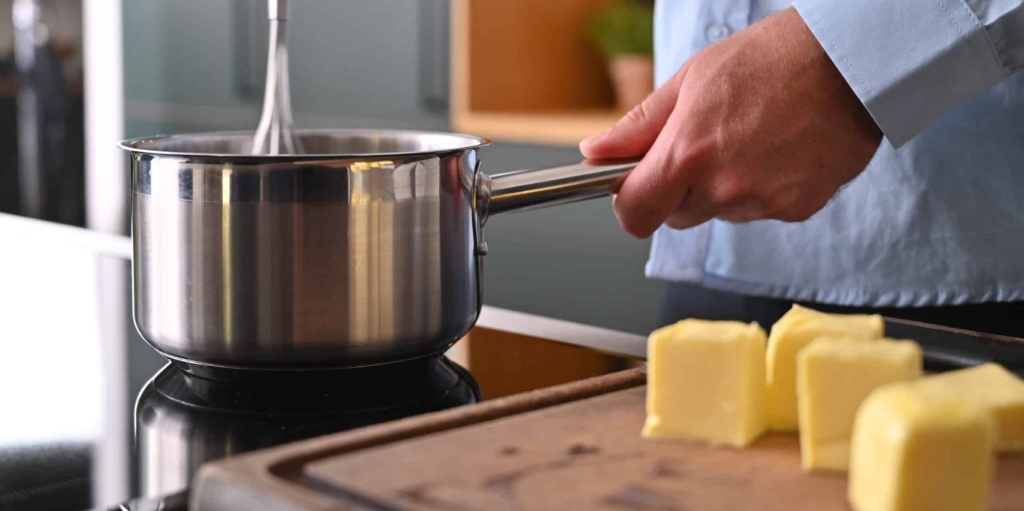
11 good temperatures for butter
With temperature control, you can get more out of your butter. Butter has many different good properties depending on the temperature you cook it at.
Here are 11 temperatures that are good to know when cooking with butter.
Butter with temperature control
If you don't have Ztove and thus the ability to control the temperature precisely, you might still get an idea of how butter reacts when frying at high versus low temperatures on your stove.
What is butter?
Butter is made by churning or stirring cream. The goal of the process is to separate the fat, resulting in buttermilk and butter. The butter is then washed with water to remove the last of the buttermilk, and finally, salt is added.
The composition of butter can vary depending on the type of butter. Generally, butter consists of at least 80% fat and has a maximum water content of 16%, with the rest being protein, lactose, i.e., milk sugar, and salt.
You can use butter for many things - especially if you know the temperature at the bottom of your pans and pots.

Low heat
50 °C
50 °C is a good temperature for melting butter. When you melt the butter at 50 °C, the milk proteins do not color, and you avoid the butter splattering. It is also the perfect temperature when you need melted butter for baking, for example.
58 °C
58 °C is the perfect temperature to prepare real sauces, such as hollandaise and bearnaise, which consist of melted butter emulsified with egg yolk.
The butter melts easily, but the temperature is low enough that you don't risk the eggs turning into scrambled eggs. You can make the sauce slowly, and it succeeds every time.
75 °C
75 °C is the temperature to mount a pan sauce with butter and to make a quick beurre monté. Add a little stock or other liquid to the pan or pot and then add butter cubes while stirring. Then you have a good classic sauce in 5 minutes.
95 °C
95 °C is a good temperature if you want to make clarified butter. It melts quickly at this temperature, but the water in the butter does not boil. Thus, you avoid the water mixing with the fat.
Instead, the whey settles at the bottom of the pot, making it easy to separate the whey and fat. Clarified butter is great for making real sauces, for example.

Medium high heat
150 °C
150 °C is a good temperature to quickly boil the water out of the butter before frying in it. Butter consists of about 16% water, and if you want to fry in butter, it's impractical to have water in it.
The water keeps the frying temperature down until it has evaporated, and it splatters and makes a mess. So it's practical to boil the water away before turning up the temperature.
160 - 175 °C
160 - 175 °C is a fine range for making ghee. Ghee is browned butter, which is good for frying. The butter is roasted for 5-6 minutes, and when the water has evaporated, you strain the fat.
This gives you a kind of clarified butter with a golden nutty flavor and aroma, which you know from frying with butter. The good thing about ghee is that it doesn't burn as easily as regular butter and can therefore be used at higher temperatures.
170 °C
170 °C is the temperature where you can fry with regular butter for about 10 minutes without it burning. The rule of thumb is that for every 10 °C the temperature rises, you can fry for half as long, and for every 10 °C it falls, you can fry for twice as long.
This means that at 170 °C, you can fry for 10 minutes, and at 160 °C, you can fry for 20 minutes without the butter scorching.
170 - 180 °C
170 - 180 °C are particularly interesting temperatures, as many pieces of meat and fish in portion sizes will be fully cooked in 5-10 minutes. Therefore, you can fry them in butter.
You can advantageously set the "standard" temperature on your pan to 170-180 °C in the app, as this range is within what is normally considered "frying temperature," and most things can be fried well at this temperature.

High Heat
190 °C
190 °C is a high temperature for butter. Theoretically, you can't fry much more than a couple of minutes at this temperature without the butter scorching. But it can still be a fine temperature for breaded fish, for example.
Breading primarily consists of flour, which needs a fairly high temperature to brown. It's a good idea to pour out the used butter between each portion of fish and then wipe the pan with a paper towel to remove brown butter residues.
200 °C +
200 °C + is a very high temperature for butter. If you need to brown something intensely, 200 °C is a fine temperature. But you need to start by browning it in oil and just add the butter in the last minute or two. Just like when you fry a steak, for example, otherwise the butter will burn.